Union County needs more than 21,000 additional residents with a postsecondary credential to meet the state's 2030 attainment goal. Leaders from schools, colleges, employers and nonprofits gathered at the 2026 Leadership Summit to map a strategy for closing that gap.
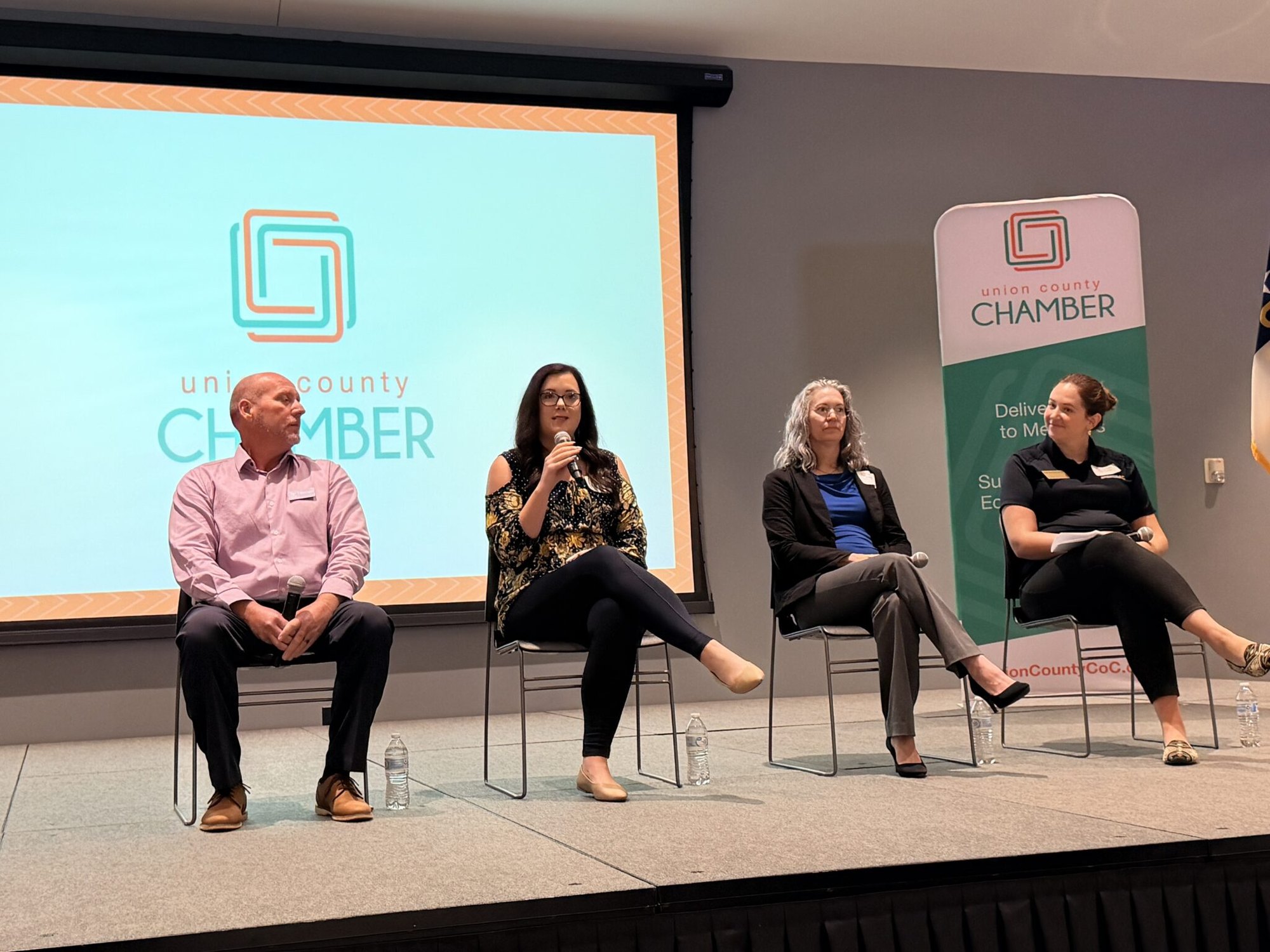
The annual summit on educational attainment and workforce development drew K-12 educators, college officials, employers and nonprofit leaders, according to a Union County Chamber of Commerce recap published Oct. 15. Union County Commissioner Melissa Merrell, UCPS Superintendent Andrew Houlihan and South Piedmont Community College President Stacy Waters-Bailey each spoke about workforce development investments at the state, regional and local level. The group's central takeaway: keeping pace with a fast-changing labor market will require sustained collaboration across sectors.
Career pathways start early
Union County Public Schools introduces career awareness early and connects students to high school academies and postsecondary options, the chamber said. South Piedmont Community College (SPCC) adds flexible, short-term credentials and customized employer training for adults and young people.
Apprenticeships drew particular attention. Programs in machining, healthcare and a teaching pathway run jointly by SPCC and Wingate University show how earn-and-learn models can pair high school pre-apprenticeships with employer-sponsored training. Panels at the summit featured representatives from ApprenticeshipNC and the UCPS Work-Based Learning Department.
Employers flag skill mismatches
Employers described a complicated hiring picture. Some receive too few qualified applicants. Others get high volumes of applications that do not match the skills they need. Across industries, employers emphasized reliability, critical thinking, problem-solving and initiative.
Barriers outside the workplace also surfaced. Summit participants named transportation gaps, childcare costs, housing pressures and uncertain nonprofit funding as obstacles that prevent qualified residents from landing or keeping jobs.
Regional scope, local stakes
More than 30 organizations connected through Our Future in UNiSON are aligning training programs and employer needs across Union and Anson counties. The collaborative, sponsored by myFutureNC, aims to ensure 59,900 residents in those two counties hold a high-quality credential or postsecondary degree by 2030.
Right now, 60.9% of Union County residents ages 25 to 44 hold a degree or credential beyond high school, according to a separate chamber workforce report citing myFutureNC data. The coalition has identified five priority career areas: healthcare, business and finance, manufacturing, information technology and construction. Manufacturing already accounts for 16.6% of local jobs, and construction accounts for 13.4%.
What comes next
Summit leaders called for scaling what works: engaging employers earlier in the education pipeline, making career pathways clear and affordable, expanding apprenticeships and tackling the practical barriers that keep workers on the sidelines. UCPS high school academies are part of the pipeline the region is trying to grow.