An invasive hornet that preys on honeybees has been detected near the Union and Mecklenburg county line, state agriculture officials say.
The North Carolina Department of Agriculture and Consumer Services (NCDA&CS) announced July 27 that a Union County homeowner reported suspicious hornet activity at her hummingbird feeder. A follow-up survey found additional yellow-legged hornets near the county line in the Matthews area, according to the NCDA&CS press release. The agency confirmed the find as the first established presence of the yellow-legged hornet (Vespa velutina) in North Carolina.
The NCDA&CS has since deployed more than 200 survey traps around the Union County home where the adults were spotted. As of August 2026, the hornets have also been detected in Guilford County, according to the NCDA&CS.
The species is spreading fast. It was first detected in the United States in Savannah, Georgia, in November 2023. By December 2025, researchers confirmed it in York County, South Carolina, just south of the Charlotte metro area. Dennis Lintz, president of the Chester County Beekeepers Association, told WSOC-TV in a December 2025 report on the York County find, "We were thinking it's years before we thought it would be around here."
The hornets hover near hive entrances and capture bees as they leave or return. Don Hopkins, North Carolina's state apiarist, said in the July 27 press release that the predation could reduce honey production and hurt crop pollination statewide.
The threat drew fresh attention after WSOC-TV reported that the north side of the Bald Head Woods Reserve Trail on Bald Head Island was closed following multiple stinging attacks on hikers. A group of four hikers and their dog encountered a nest and were stung multiple times, according to an Oct. 2 news release from village officials cited by the Charlotte Observer. Public Works staff who responded were also stung repeatedly. Officials have not confirmed whether the species at that site is the yellow-legged hornet.
What the hornets look like
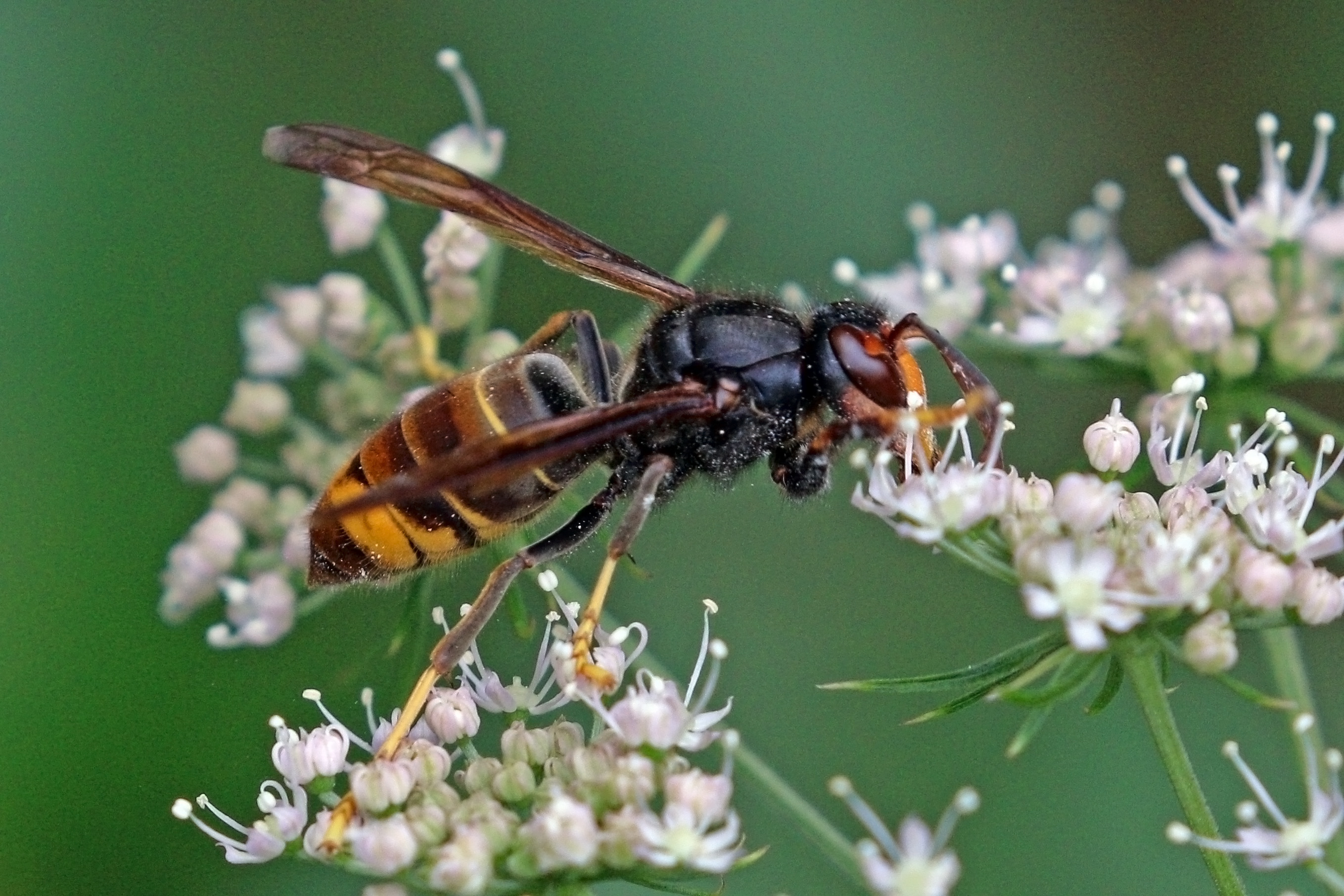
Adults are about an inch long. Their most distinctive feature is the yellow lower half of each leg. They have a dark thorax and an abdomen that is dark at the base and lighter toward the tip, according to the NCDA&CS.
Nests are reddish and muddy in color, unlike the gray nests of native bald-faced hornets. Early in the season they can be volleyball-sized. By late fall, they can grow large enough to fill a pickup truck bed and sit at least 33 feet above ground in trees, according to the NCDA&CS and StarNews reporting.
What residents can do
The NCDA&CS and the U.S. Department of Agriculture are conducting joint trapping and surveillance across the region. The agency asks residents and beekeepers to report sightings using the Yellow-Legged Hornet Reporting Tool at ncagr.gov/YLH.
Home traps should be set in March to catch new queens and in May for workers, then monitored every one to two weeks through the first frost, according to the NCDA&CS.
Brad Cavin, South Carolina's apiary inspection program coordinator at Clemson University, explained the logic in a December 2025 WSOC-TV report on the York County detection: "Every queen that's out means there's not going to be a potential nest next year."