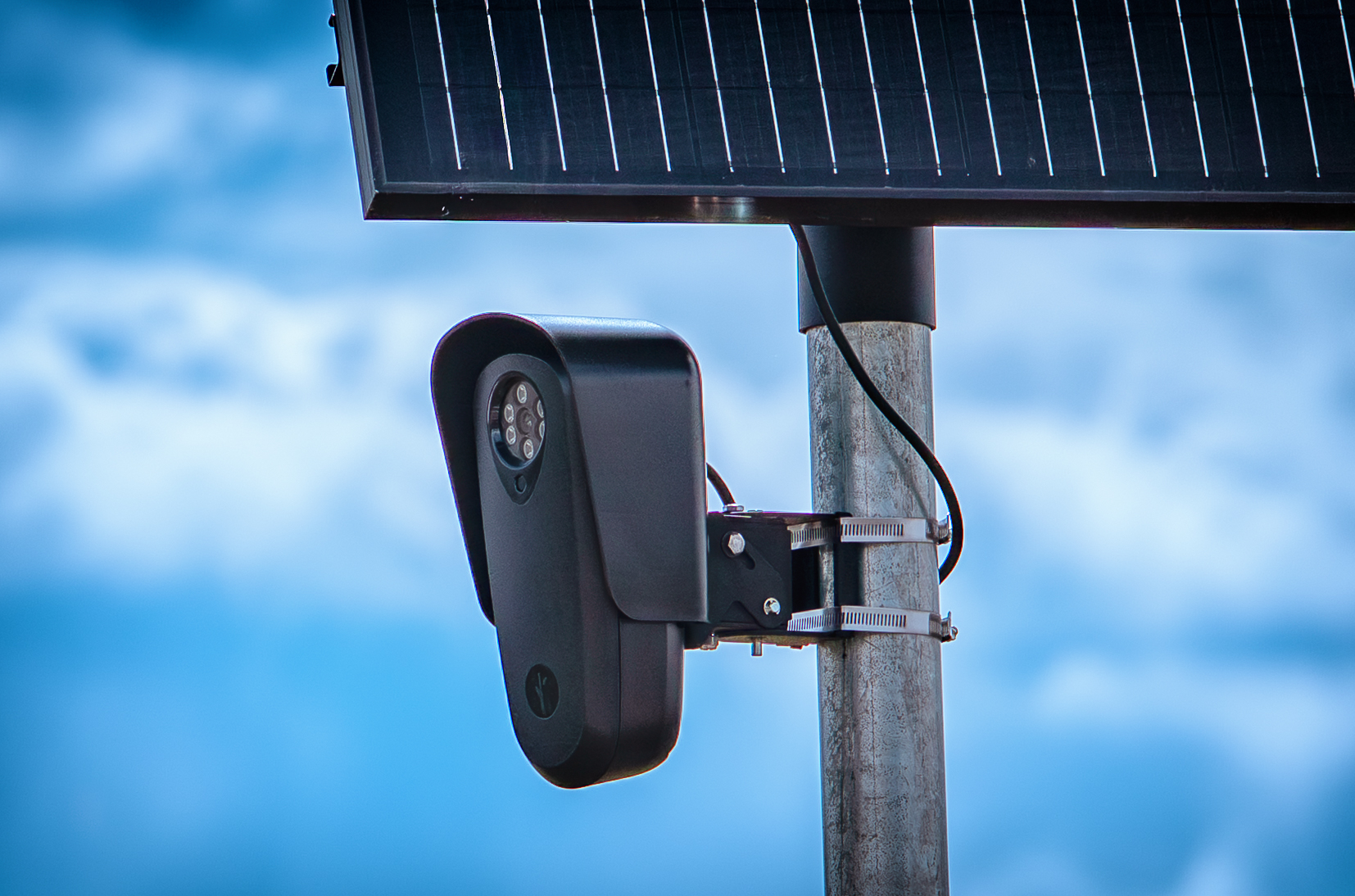
Waxhaw's five Flock license plate reader cameras generate roughly 8 million plate reads per month, police told the Board of Commissioners on Sept. 22.
The disclosure sparked a work session debate over surveillance safeguards. Three commissioners proposed specific new controls on the program.
Police Chief Dexter Wilson and Sgt. Jeremy Ferguson presented the camera program at the Tuesday evening session, according to meeting minutes. The system does not perform facial recognition, collect biometric data, identify drivers or passengers, or enforce traffic laws, Wilson and Ferguson said.
Commissioner Richard Daunt proposed a formal policy banning facial recognition, RFID data collection and any license plate reader-based restrictions on freedom of movement. Commissioner Daniel Farris suggested a policy trigger requiring staff to report any expansion of camera capabilities to the board in advance. Commissioner John Gemignani questioned the oversight process and how additional cameras would be approved.
The board noted the cameras were deployed without a formal board vote. Members discussed whether any future Town-owned cameras should require specific board approval rather than being added through a budget line item.
Under current policy, captured plate data is automatically deleted after 30 days unless preserved as evidence in an active case. Flock's default retention period is seven days; Waxhaw extended that to 30.
Hot-list entries are set for automatic deletion after 90 days unless police justify keeping them longer. All searches are logged and audited monthly by the chief.
Wilson has defended the program publicly. "We have nothing to hide … We're not running your information for bad intentions," he told Queen City News on Aug. 20, when privacy advocates questioned the technology during a national awareness campaign.
At the work session, police described cases in which the system flagged a registered sex offender's vehicle entering a neighborhood where the man was found approaching children, helped locate a sexual assault suspect within seconds and tracked down an elderly man with dementia who had driven away from home.
Cameras at locations such as Walmart, Lowe's and Millbridge are privately operated, not owned by the Town, but can feed data into the broader law enforcement network, according to The Waxhaw Wall, a local news site whose author, Commissioner Daunt, participated in the discussion.
The board agreed a formal Flock policy proposal should come back at a future work session. No specific date was set.
Data center ordinance takes shape
Commissioners also received an update on the town's 12-month data center moratorium, adopted unanimously on Aug. 11 under Ordinance ORD2026014. The moratorium expires no later than Aug. 10, 2027. No data center had applied for approval as of the moratorium's adoption.
Development Services Director Kevin Robinson told the board his staff had reviewed ordinances from roughly 40 jurisdictions. Nationally, 57 jurisdictions have taken some form of action on data centers, and 35 have adopted or extended a moratorium. North Carolina ranked as the fourth most active state.
Robinson said the most common regulatory approaches place data centers in industrial districts and require either a special-use permit, conditional rezoning or permitted-by-right status with special requirements. He expressed a professional preference for the by-right-with-requirements model, citing its objectivity and enforceability.
Commissioners raised concerns that a by-right approach would lack public transparency. Commissioner Farris noted that data center technology evolves so quickly a fixed list of by-right criteria could become outdated fast.
Town Attorney Matthew Dellinger suggested a split approach: by-right for smaller facilities and conditional rezoning for larger ones. He said the model is consistent with what Fayetteville and other jurisdictions have adopted.
The board directed staff to develop a public-facing webpage and structured community survey on data centers. Staff will provide the next update in November. No ordinance was adopted.
The board's next regular meeting is Tuesday, Oct. 13, at 6:30 p.m.